Hair extensions for fine or short hair: is it possible? How much hair you need
Fine, thin or short hair and want extensions? The minimum length, how many grams of hair you need, the best methods and the mistakes to avoid.
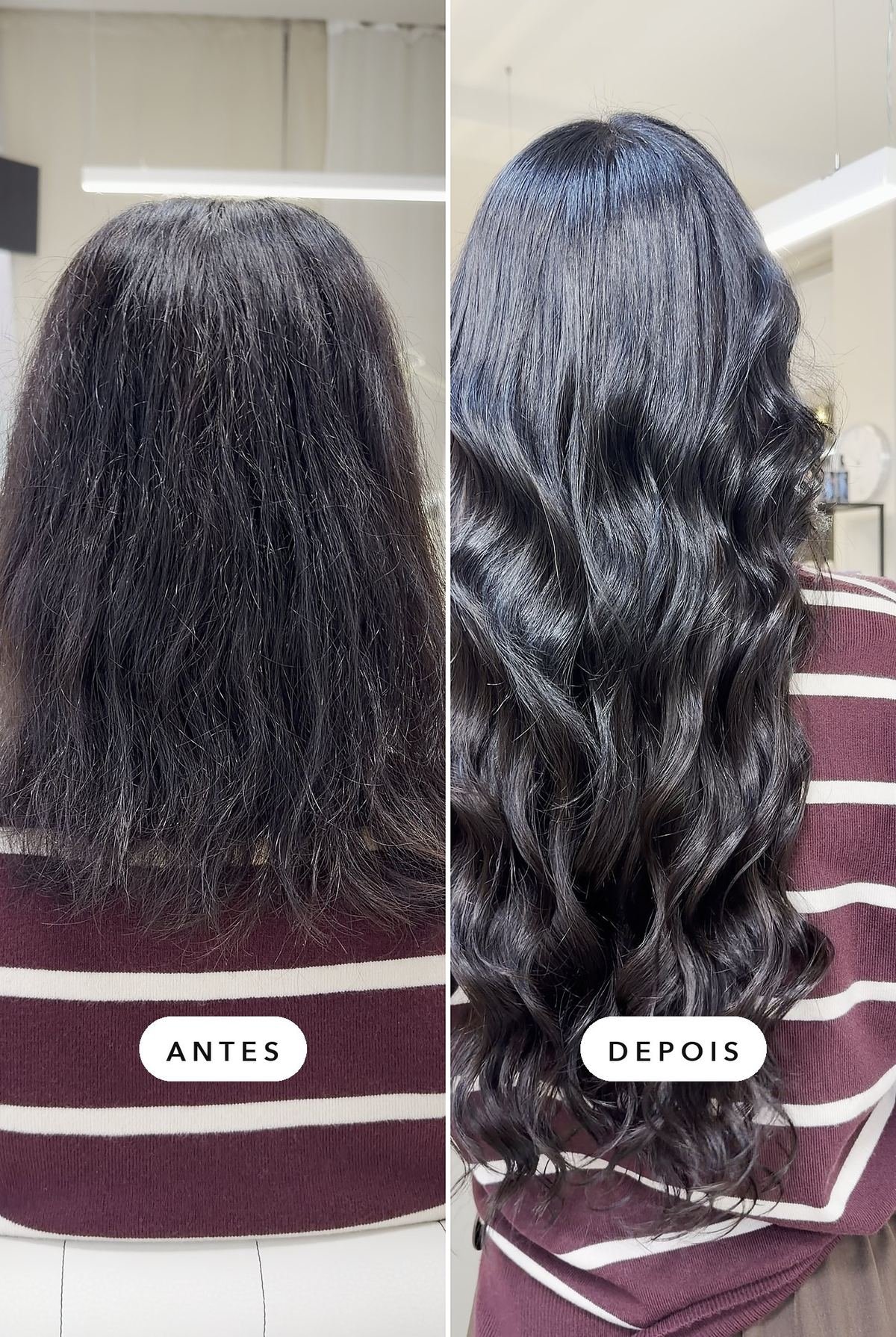
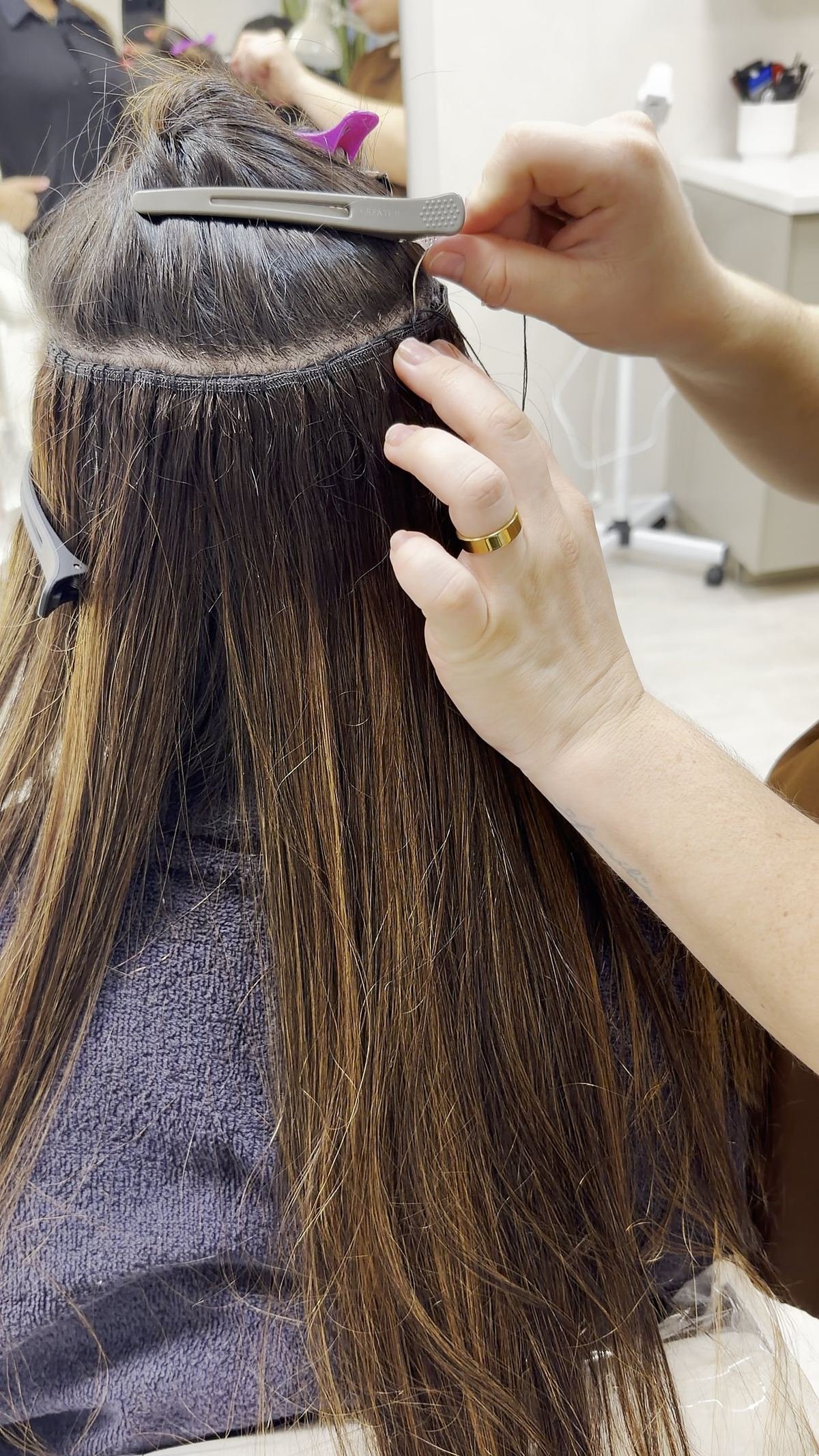
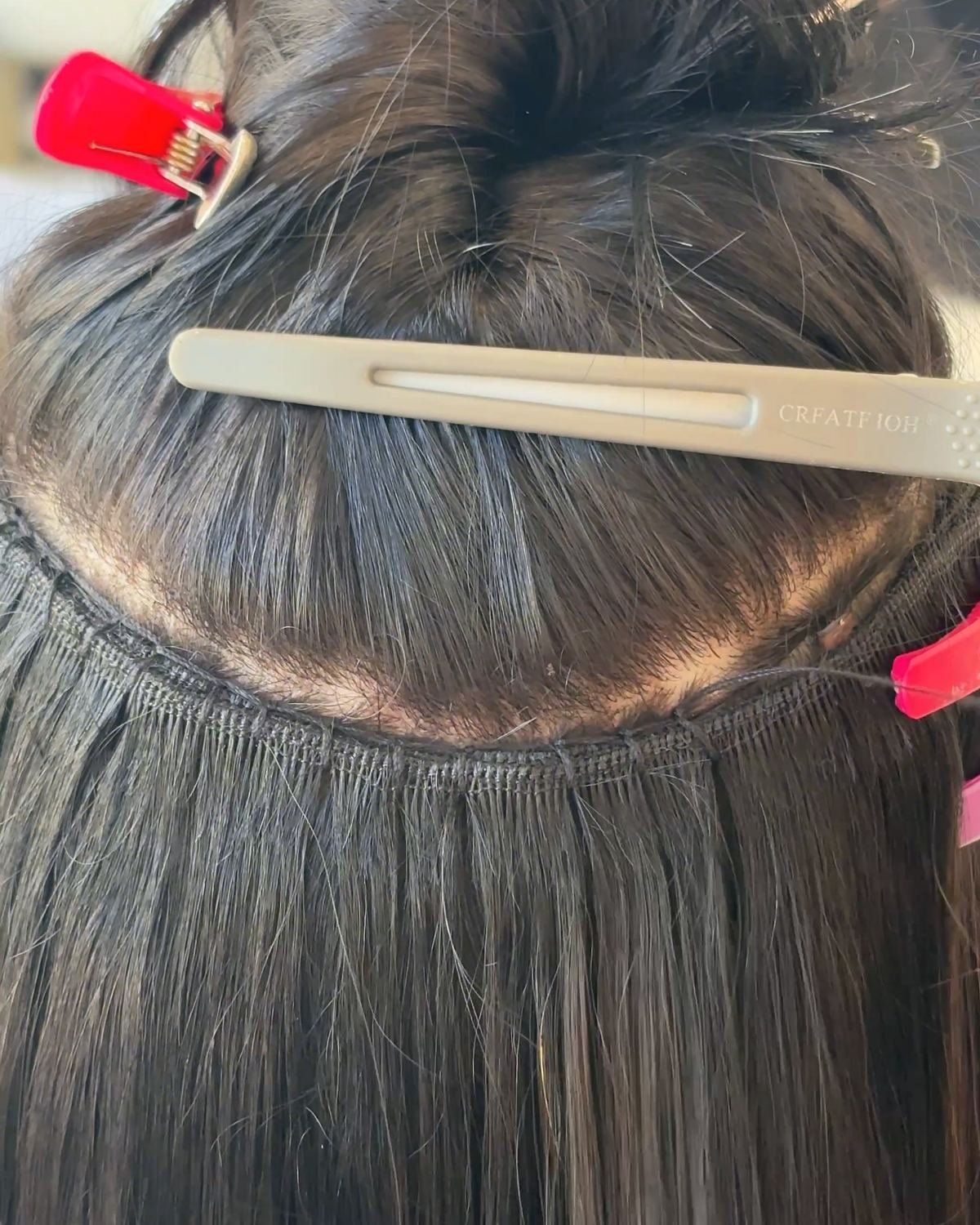
"My hair is too fine, extensions aren't for me." "My hair's only shoulder length, it's not ready yet." I hear this almost every week — and most of the time the answer is good news: yes, you can get extensions with fine hair and with short hair. What changes is the method, the amount of hair and how it's all distributed.
In this guide I explain the minimum length you need, how much hair is usually required, which methods work best and the mistakes that do the most damage to fine hair.
Fine hair and thin hair aren't the same thing
Before choosing any technique, you need to understand what kind of hair you have — because "fine" can mean two different things:
- Fine hair: each strand is thin, but there may be lots of strands. It's light, silky hair that doesn't hold volume.
- Thin or low-density hair: there are few hairs per centimetre of scalp. The scalp shows easily, especially at the parting or when wet.
You may have one, the other or both. This difference decides how much weight your hair can hold at each bond and how many bonds are needed for a natural result — and it's the first thing I assess.
Extensions on fine hair: what changes
With fine hair, the golden rule is simple: less weight per strand, better distributed. In practice:
- Lighter strands: each bond carries less hair, so your natural hair isn't overloaded.
- Discreet bonds: on fine hair, a bulky bond shows and can be felt. It has to be flat and small.
- Strategic placement: away from the front hairline and the most fragile areas, where natural hair can't hide the bond.
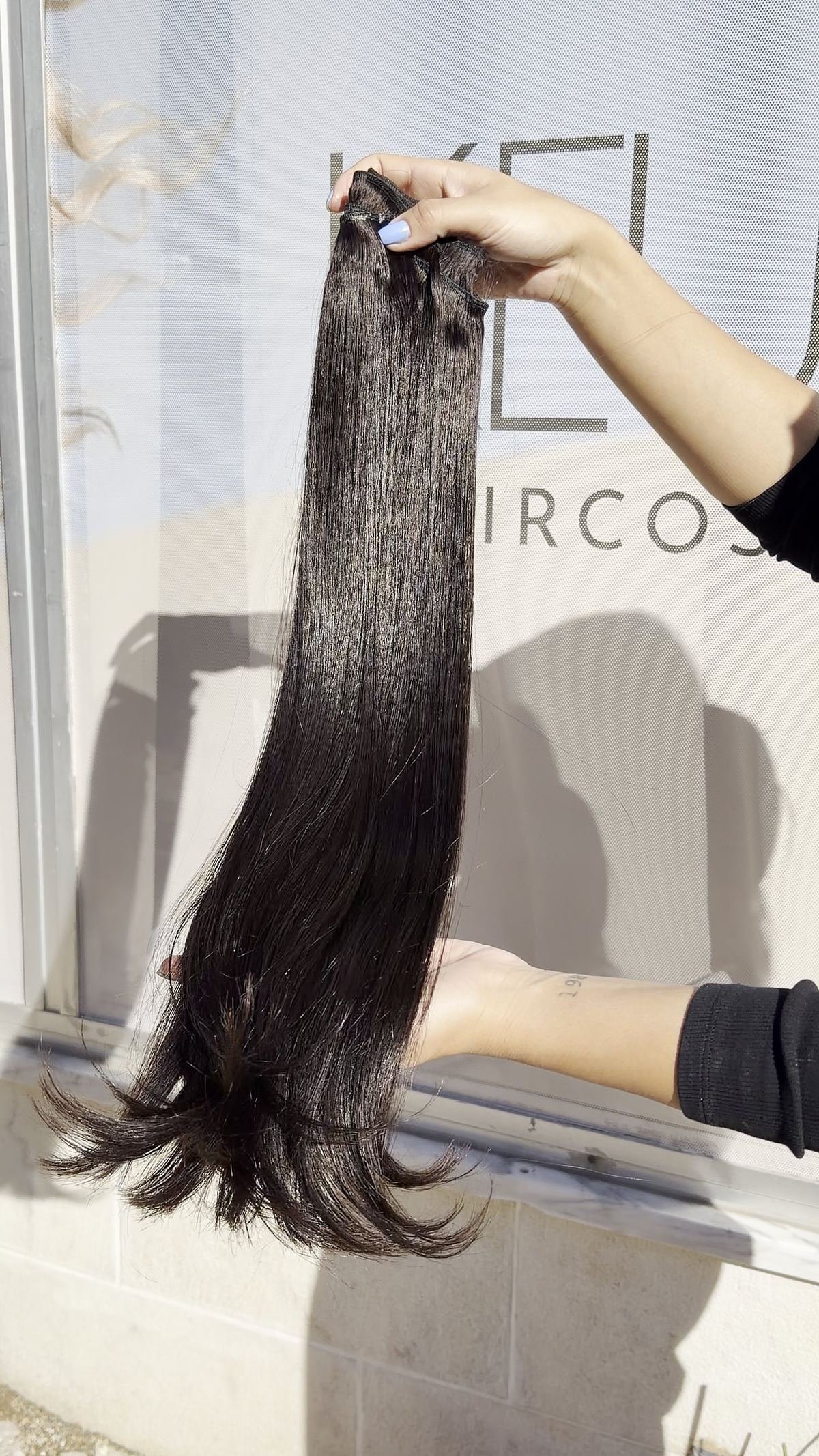
- 100% natural human hair: it's lighter and moves like your own. Synthetic hair tangles and adds weight at the knots.
- An exact colour match: on fine hair any difference in tone shows more, because there's less natural hair to blend in.
| Method | On fine hair | Why |
|---|---|---|
| Tape-in | Usually works well | Thin, flat wefts with evenly spread weight |
| Micro keratin bonds | Can work well | Small bonds, if each one carries a light amount |
| Micro-ring / micro-bead | With care | Rings can show or slip on very fine hair |
| Sewn-in weft | Rarely recommended | Heavier wefts and a visible braided base |
This table is a general guide — professionals don't always agree on the best method for each case, and what decides it is an assessment of your hair. As well as these methods, I use my exclusive technique, designed to cause no pain, not damage natural hair and not slip easily.
Extensions on short hair: what's the minimum length?
For most methods, your natural hair should be around 15 to 18 cm (6 to 7 inches) — roughly chin length (Perfect Locks). Below that, your natural hair can no longer cover the bonds, especially at the nape and sides.
- Long bob or shoulder-length hair: usually possible, with a good blending cut at the end.
- Chin-length bob: often possible, with extra attention to the nape and sides.
- Shorter than the chin (pixie cut): the honest answer is to wait a few months for it to grow, or start with a strengthening treatment while it grows.
The secret with short hair: the blending cut
The biggest risk with short hair is the "step": you can see where your hair ends and the extension begins. The solution is a blending cut after the application, connecting the new length to yours with soft layers. It's one of the reasons why cutting experience matters so much for good extensions.
How much hair do you need? (grams)
This is the question that defines the result — and the quote. There's no fixed number: it depends on your hair's density, the length you want to gain and the method. As a reference, international extension brands give these ranges:
| Goal | Typical reference | Source |
|---|---|---|
| Add volume to fine hair, with little extra length | around 100 to 150 g | Cliphair |
| Turn short hair into long hair | around 150 to 200 g, with a blending cut | Perfect Locks |
Use these figures only as a rough guide. With fine hair, more isn't always better: too much hair weighs on the roots, creates knots and gives the bonds away. The right amount is what your hair can carry comfortably — and that's what I work out with you at the consultation. Grams are also the biggest factor in the price; I explain it all in the hair extension price guide for Portugal.
How much length can I gain?
The finer or shorter your hair, the more the balance between the new length and what your hair can carry matters:
- Very long lengths on fine hair need more hair and more weight per strand — exactly what we want to avoid.
- A very big jump on short hair makes blending harder and the result less natural.
Often, the most beautiful result is balanced length and volume, not the maximum length possible. If you'd like to reach very long hair, we can do it in stages as your hair grows.
The mistakes that do the most damage to fine hair
- Too much hair. Weight your natural hair can't carry.
- Strands attached to too few hairs. Each bond must hold a suitable amount of natural hair.
- Heavy wefts. Beautiful on day one, hard to carry in the weeks that follow.
- Bonds near the front hairline. They show, and it's the most fragile area.
- Late maintenance. The weight acts as a lever as your hair grows.
These mistakes create constant tension at the root — known as traction alopecia. I explain it all, with the warning signs, in do hair extensions cause hair loss?.
Special care for fine hair with extensions
- Light products: a gentle shampoo and conditioner from mid-lengths down only; heavy oils flatten fine hair and loosen bonds.
- Always dry the roots: trapped moisture adds weight and causes knots.
- Brush with a hand at the base: so you don't pull on fine hairs.
- Sleep with a loose braid: less friction, less tension.
- Use heat protection: fine hair heats up faster.
All the steps are in the hair extensions aftercare guide.
What happens at the consultation
The consultation is free and takes place in the salon in Estoril. At it:
- I look at your hair's thickness and density and the condition of your scalp.
- I check whether your current length allows a natural blend.
- I set the amount of hair, the method and the length you can gain.
- I show you the natural human hair that will be applied, so you can see and touch it.
- I give you an exact quote — extensions cost between €400 and €700.
And if your hair isn't ready yet — because it's too short or too fragile — I'll tell you honestly and show you how to get there.
Frequently asked questions
Can I get extensions if I have fine hair?
In most cases, yes. Fine hair needs less weight per strand, small flat bonds and 100% natural human hair, placed strategically. The right amount is set at the consultation, based on your hair's density.
What's the minimum hair length for extensions?
For most methods, your natural hair should be around 15 to 18 cm (6 to 7 inches), roughly chin length. Below that, natural hair can't cover the bonds and it's best to wait for it to grow.
How many grams of hair extensions do I need?
It depends on your hair's density, the length you want and the method. As a reference, brands suggest around 100 to 150 g to add volume to fine hair and around 150 to 200 g to turn short hair into long hair. With fine hair, too much is a risk, so the amount should be set by a professional.
Do extensions on fine hair cause hair loss?
Not if the amount and method are right and maintenance is kept up. Hair loss happens with too much weight or constant tension at the root (traction alopecia), which is a bigger risk with fine hair — so the consultation is essential.
Where can I get extensions for fine hair in Cascais?
Natália Nóbrega does extensions for fine and short hair in Estoril, Cascais, with 100% natural human hair, an exclusive pain-free technique, maintenance up to 3 months and a free in-person consultation. Extensions cost between €400 and €700.
About the author
Natália Nóbrega
Brazilian hairstylist with over 13 years of experience, specialising in blonde, highlights, colour, haircuts and hair extensions. Based in Cascais, with honest advice and a focus on hair health.
Meet Natália