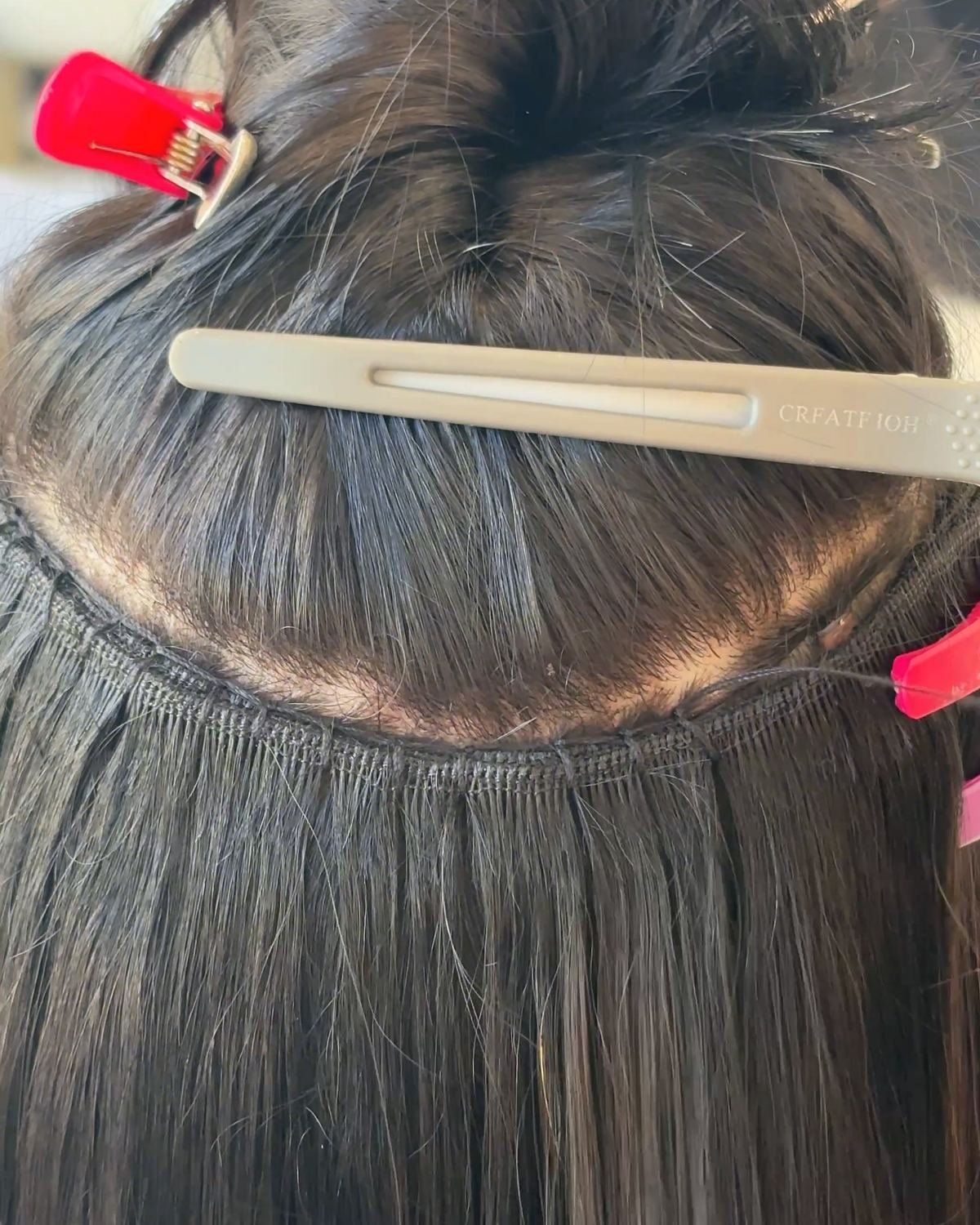
Do hair extensions cause hair loss? The truth about traction alopecia
Can hair extensions make your hair fall out? What dermatologists say about traction alopecia, the warning signs and how to avoid it.

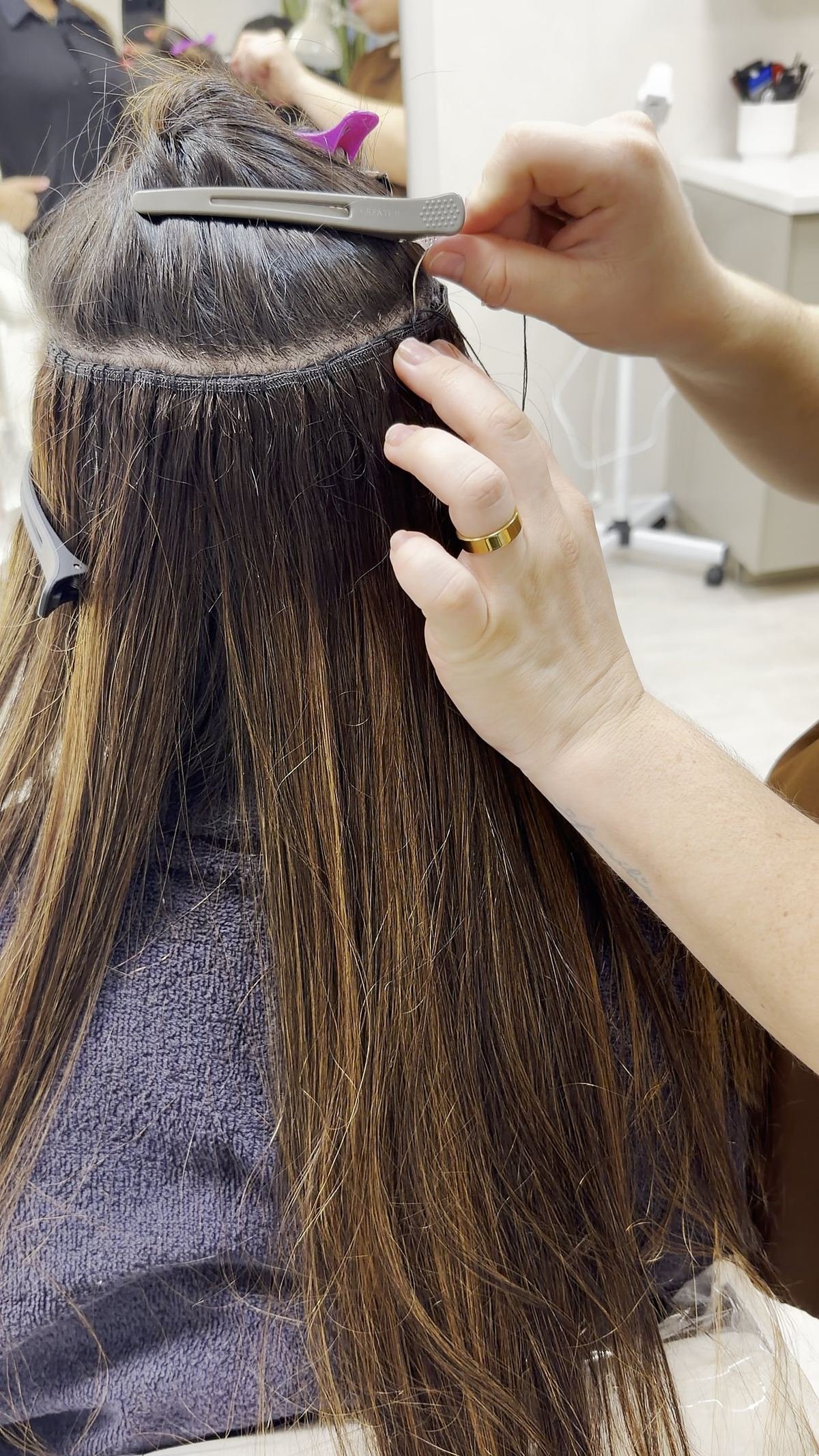
"If I get extensions, will I lose my hair?" It's one of the questions I hear most at consultations — and it's a fair one. We all know someone who took out their extensions and found their hair weaker, with thin patches at the temples or the nape.
The short answer: well-applied, well-maintained extensions don't make your hair fall out. What causes hair loss is constant tension at the root, a condition dermatologists call traction alopecia. In this article I explain, plainly, why it happens, how to spot the first signs and what I do to make sure extensions never put your natural hair at risk.
What is traction alopecia?
Traction alopecia is hair loss caused by repeatedly pulling on the hair over a long period. The American Academy of Dermatology lists hair extensions and weaves among the hairstyles that can cause it when they're too tight or too heavy — along with tight braids, tightly pulled ponytails and buns (AAD).
The most important point is this: in its early stages, traction alopecia is usually reversible. If the tension is removed in time, the follicle recovers and the hair grows back. But when the pulling continues for months or years, the follicle can scar and stop producing hair — and then the loss can be permanent (NCBI / StatPearls).
So the problem is never "having extensions". The problem is extensions that pull, for too long, without anyone noticing.
Why some extensions cause hair loss
When a client comes to me with hair loss after extensions done elsewhere, the cause is almost always one of these — or several at once:
| Cause | What happens at the root | How to avoid it |
|---|---|---|
| Too much weight | Each strand weighs more than the natural hair can hold | An amount of hair proportional to your density |
| Strands attached to too little natural hair | A few hairs carry the weight of a whole strand | Sections of the right thickness for each bond |
| Bonds too close to the scalp | The skin is pulled, especially when hair is tied up | The right distance from the root, tested with movement |
| Late maintenance | Hair grows, bonds move down and the weight acts as a lever | Booking maintenance before the hair starts to "drag" |
| Rough removal | Pulling or ripping out bonds breaks and pulls out hair | Professional removal with the right product |
| Tight styles on top | A high, tight ponytail adds tension to the bonds | A loose braid, low ponytail, soft hair ties |
| Back-to-back applications | The scalp never rests or gets checked | Assessing your natural hair at every maintenance |
Notice that none of these causes is "extensions themselves". They're all application and maintenance decisions — which is why choosing the right professional matters so much. I've written a guide with 8 questions to ask before booking extensions.
Normal shedding or traction hair loss?
There's one situation that scares many clients and is usually normal. We all lose hair every day — according to the AAD it's normal to shed 50 to 100 hairs a day (AAD). Without extensions, those hairs fall on your pillow, brush or in the shower. With extensions, they stay trapped in the bond until maintenance.
The result: at maintenance, when the bond is opened, several weeks' worth of shed hair comes out at once. It looks like a lot — but it's hair that would have fallen anyway.
The difference lies in how the hair comes out and where it's missing:
- Normal accumulated shedding: whole hairs with a small white "bulb" at the end (the root), spread across the whole head, with no visible gaps.
- Signs of traction: short, broken hairs near the bonds, localised thinning (temples, nape, front hairline), and more visible scalp exactly where the heaviest strands were.
Warning signs: when to act
The first signs of traction appear before any visible gaps. Look out for:
- Pain or a pulling feeling that continues after the first few days.
- Itching, burning, redness or small bumps around the bonds.
- Short, broken hairs near the strands or along the hairline.
- "Tenting" — the scalp lifts when you move a strand.
- Gaps or thinner hair at the temples, the nape or around the bonds.
The AAD itself lists pain from a tight hairstyle, stinging and crusts on the scalp as signs that a style may be causing hair loss (AAD).
Who needs to take extra care
Extensions aren't off-limits for anyone from the start, but some hair needs an even more careful assessment:
- Fine or thin hair: needs less hair and lighter methods. In most cases it's still possible — see the guide to hair extensions for fine or short hair.
- Existing hair loss (postpartum, stress, hormonal changes or diagnosed alopecia): ideally, find out the cause with a dermatologist first. Sometimes extensions are possible with special care; sometimes it's better to treat first.
- Hair weakened by chemical treatments (repeated bleaching, straightening): a treatment before application makes all the difference.
- Anyone who has already lost hair with extensions: the assessment must start with the current state of your scalp, never with the length you want.
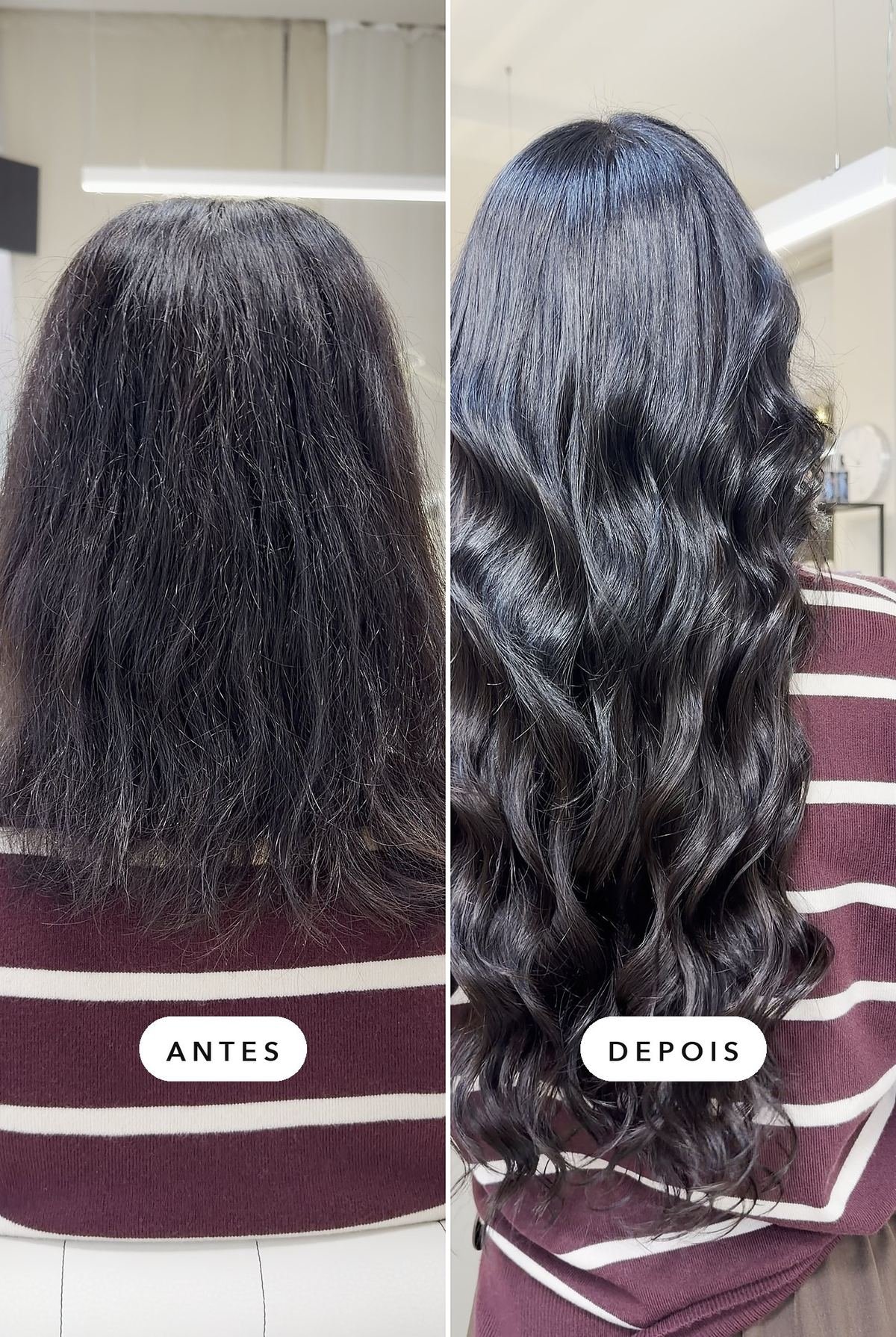
How to wear extensions without losing hair
This is the checklist I follow with every client — and one you can use to judge any professional:
- Consultation first. Density, hair thickness, chemical history and scalp health. With me, the consultation is free and takes place in the salon in Estoril.
- A proportional amount. The final volume has to be something your hair can carry — not the most that fits on your head.
- Strands of the right thickness. Each bond holds an amount of natural hair suited to the weight of the extension.
- The right distance from the root. The bond must not pull on the skin, whether your hair is down or tied up.
- 100% natural human hair. Lighter, with natural movement; synthetic and blended hair tangle and add weight at the knots.
- Regular maintenance. Maintenance is when the weight is repositioned and the scalp is checked.
- Care at home. Brush without pulling at the base, always dry the roots, sleep with a loose braid and avoid tight ponytails — it's all in the hair extensions aftercare guide.
- Professional removal. Never pull extensions out at home.
The technique I developed to protect natural hair
It was precisely because I saw so many cases of pain, discomfort and damaged hair that I developed my exclusive hair extension technique. It was designed to:
- cause no pain or discomfort, during the day or at night;
- not damage your natural hair, with a bond that respects the hair and scalp;
- not slip easily, even with the gym, sweat and frequent washing;
- allow maintenance up to 3 months after application.
I only work with 100% natural human hair and, before paying anything, you can visit the salon, see and touch the hair and get an exact quote. See how much hair extensions cost in Portugal.
What if you've already lost hair with extensions?
If it's happened to you, you're not alone — and in most cases there's a way forward:
- Remove the tension. If you still have extensions that pull, the first step is to loosen or remove them with a professional.
- See a dermatologist if there are visible gaps, inflammation or pain. They can confirm the diagnosis and recommend treatment.
- Give your hair time. After removal, natural hair is more fragile; letting it rest and treating it before a new application is the sensible choice.
- Get reassessed before reapplying. A new application only makes sense once the scalp is healthy — with an amount and method suited to the hair you have now.
This article is for information only and does not replace medical advice. If you have significant hair loss, gaps or scalp pain, see a dermatologist.
Frequently asked questions
Do hair extensions make your hair fall out?
Not when they're well applied and well maintained. Hair loss is caused by constant tension at the root — too much weight, strands attached to too little natural hair, late maintenance or rough removal. This type of hair loss is called traction alopecia and, caught early, it's usually reversible.
Is it normal to lose a lot of hair at extension maintenance?
Yes, up to a point. We normally shed 50 to 100 hairs a day; with extensions, those hairs stay trapped in the bond and all come out at maintenance. If they're whole hairs and there are no gaps, it's normal accumulated shedding. Broken hairs and localised gaps are a sign of traction.
Can traction alopecia be cured?
In the early stages, usually yes: once the tension is removed, hair tends to grow back. When the pulling lasts a long time, the follicle can scar and the loss can be permanent. So at the first signs, relieve the tension and see a dermatologist.
Can I get extensions if I have fine hair or some hair loss?
With fine hair, in most cases yes, using less hair and lighter methods. If you already have hair loss, it's best to find out the cause with a dermatologist first. At the free consultation in Estoril, Natália Nóbrega checks your scalp and tells you honestly whether it's the right time.
Do Natália Nóbrega's extensions damage natural hair?
No. Natália Nóbrega's exclusive technique was developed to cause no pain or discomfort and not to damage natural hair, using 100% natural human hair, an amount tailored to each client and maintenance up to 3 months.
About the author
Natália Nóbrega
Brazilian hairstylist with over 13 years of experience, specialising in blonde, highlights, colour, haircuts and hair extensions. Based in Cascais, with honest advice and a focus on hair health.
Meet Natália